
What Should Be on Your Birth Plan? (And Why I Regret Not Having One)
Before I had my son, I didn’t make a birth plan. I figured I’d just “go with the flow,” trust the doctors, and see how things played out. I truly thought being chill would make the process easier.
Spoiler: I totally regret it.
My Birth Experience (And What I Wish I’d Known)
Or jump straight to your Birth Plan checklist
Hurricane Season Due Date
My son was due right in the height of hurricane season. I desperately tried every trick and labor hack I could find. If he wasn’t born before the upcoming storm hit, I would have to be induced—which I really did not want. In Florida, when hurricanes strike, emergency services essentially shut down, and I definitely didn’t want a surprise home birth by ourselves. Unfortunately, Mother Nature had other plans: he wasn’t ready, my body wasn’t ready, but the hurricane sure was.
Waiting For The Induction
I accepted that I’d need induction and waited for the doctor’s call. Hospital bag packed. I was making breakfast when my phone rang. My husband was at Walmart picking up hurricane supplies “just in case.” I scarfed down my French toast because I didn’t know when I’d eat again. On our way to the car, I handed him his eggs—and he tossed them in the bushes. No appetite, I guess! My mom had flown down from New England for the birth, and the three of us headed to the hospital.
Initial Issues
We arrived at the hospital (without a birth plan.) Once there, the induction started with Pitocin. I had the drip all day, but for a long stretch, nothing really happened. Deep down, I felt something was off—my gut kept telling me that the IV wasn’t working properly. I mentioned it to the staff, and they assured me everything was fine. It wasn’t until the third check, when my arm had swollen like Popeye, that they realized the medication had been going into my tissue instead of my bloodstream. That moment shook my confidence in the medical team’s capabilities.
The Epidural
I had been having contractions for quite a while before I felt I needed an epidural—I was already 5 cm dilated when I requested it. I could feel the contractions, but maybe because I’ve had such painful period cramps my whole life, they didn’t initially feel unbearable. This isn’t everyone’s case but for me, the epidural procedure was painful. I was so relieved when it finally kicked in.
Breaking My Water & Starting to Push
I continued having contractions for a while, and eventually the doctor came to break my water manually. I was terrified and unsure if I could say no. When I was finally dilated enough, I began pushing with only one nurse in the room and my husband by my side. There was almost no guidance—the nurse simply counted repeatedly and told me to push.
It quickly became obvious that my efforts weren’t working, so I started asking questions: Should I move? Is there something I can do differently? How much has changed since we started? How long do you think I have to go? Where is the doctor?
Feeling Contractions
As the epidural began to wear off, I started to feel the contractions fully—like a crank being wound tighter and tighter with each wave. My husband would ask if I wanted to take a break, not realizing it wasn’t the pushing that hurt, but the contractions themselves, building stronger and stronger. I consider myself a mentally strong person, but after hours of effort, I eventually put my head on the handrail and said, “I can’t do this.”
C-Section Decision
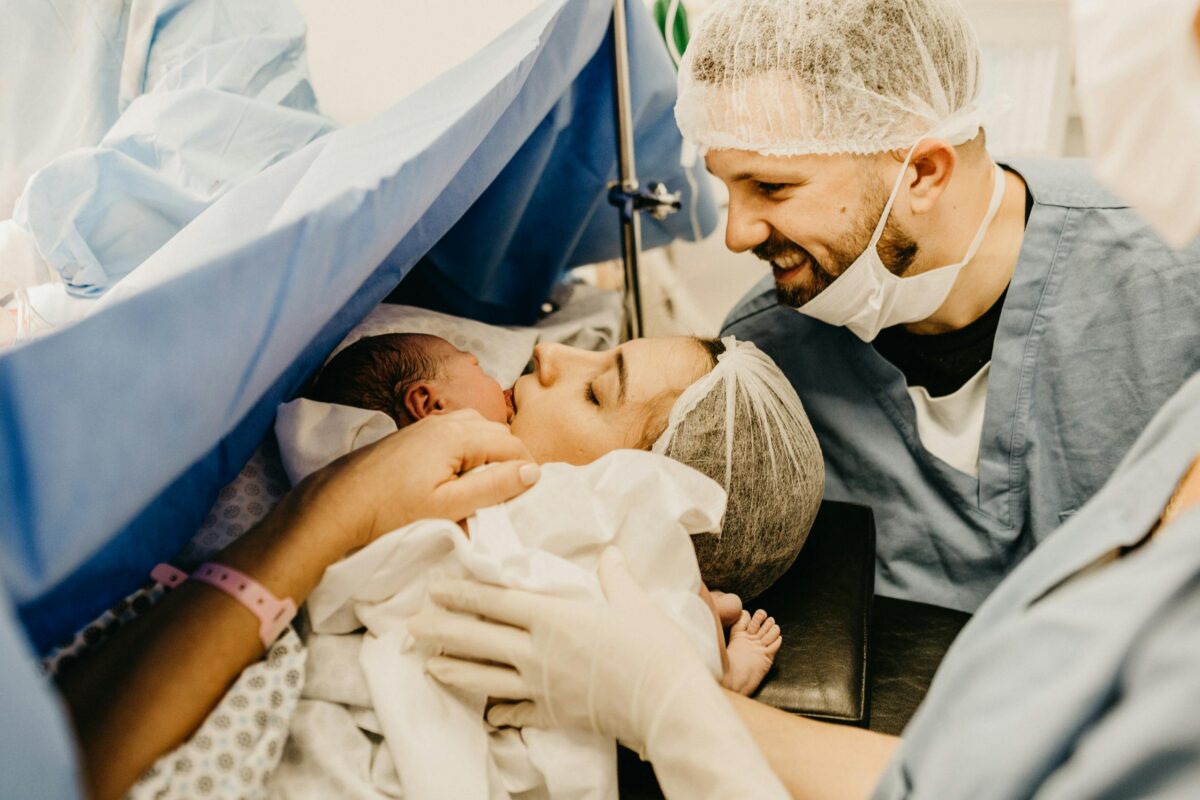
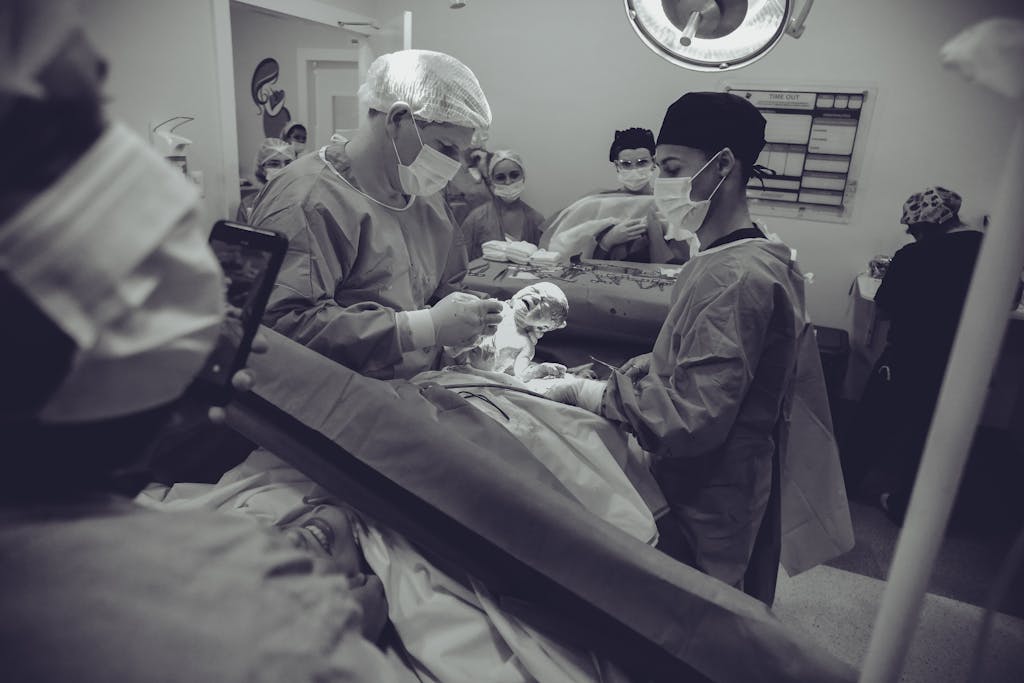
By that point, I had been pushing for four hours. Finally, the doctor came in and said a C-section would be necessary—my baby was stuck. Exhaustion from lack of sleep, lack of food, and the relentless strain of pushing had left me physically and mentally spent.
Originally, I adamantly did not want a C-section, but delirious, exhausted, in pain, and through tears, I signed the waiver. At that point, I was done. I felt completely out of control and I just wanted my baby safely here.
Recovery & Complications
Looking back, I realize I hadn’t made a birth plan. I hadn’t asked questions. I hadn’t even written down what I might want. I did not receive skin-to-skin contact right away, and I don’t think I was able to feed him for hours. My son ended up with a large hematoma on his head from being stuck in the birth canal and required evaluation. I, too, suffered—developing femoral nerve damage from being in the wrong position while pushing. I fell three times in the hospital before they figured out what was wrong, and I couldn’t walk by myself for a full month. I had to use a walker and a commode in the bathroom and shower. I felt completely helpless, and my recovery was absolutely miserable. I know it all could have been worse, and at least we are okay—but I can’t help feeling robbed of a good birth experience.
Even small things—like discussing in advance what roles your support people will have—can make a difference. My husband and mom hadn’t discussed it, and there was tension when my water was broken about who should be front and center for me. It wasn’t a huge deal in the moment, but it added stress to an already overwhelming day.
Lesson Learned: Advocate for Yourself
I’m not entirely sure why I didn’t advocate for myself more. Part of it was being completely overwhelmed by everything else I had to manage, and part of it was not wanting to be a bother—I’ve always been a people pleaser. I worried that doctors or nurses would roll their eyes at me, that I’d be “that mom with her little checklist.” But here’s the thing. This is one of the biggest moments of your life. Next time around, it will be completely different. You deserve to have a say in your preferences, to ask questions, and to make your voice heard.
Empowerment and Advice for Other Moms
I don’t want to scare anyone. People have been having babies every day since the beginning of time, which is part of why I wasn’t that nervous and didn’t feel a birth plan was necessary. But the truth is, you should be in control. Birth is a major medical procedure, and it deserves preparation—you shouldn’t go in blind. Knowing your options, asking questions, and having a plan can make all the difference in your experience.
So… What Should Be on Your Birth Plan?
A birth plan isn’t about being rigid or demanding. It’s just a way to communicate your preferences in case things are moving fast, you’re too overwhelmed to speak up, or you’re not getting the support you imagined.
Here’s a list of common things to include on your birth plan.
1. Who You Want in the Room
- Partner, parent, doula, photographer?
- Do you want minimal staff or students observing?
2. Pain Management Preferences
- Do you want an epidural? As soon as possible or only if you ask?
- Would you like to try unmedicated techniques first (breathing, movement, water, etc.)?
- If your epidural doesn’t work properly—what’s the backup plan?
3. Monitoring
- Continuous fetal monitoring vs. intermittent?
- Freedom to move around?
- Cervical checks?
4. Positions for Labor and Pushing
- Do you want to be allowed to try different pushing positions (side-lying, squatting, hands-and-knees)?
- Would you like direction from a nurse or to follow your body’s cues?
5. Interventions
- Preferences around induction (Pitocin, membrane sweep, etc.)
- Thoughts on assisted delivery tools (forceps, vacuum)
6. C-Section Preferences (Planned or Emergency)
- Clear drape to watch?
- Skin-to-skin in the OR?
- Who will hold the baby first?
- Music or calm environment?
7. After Birth
- Immediate skin-to-skin?
- Delayed cord clamping?
- Who cuts the cord?
- Vitamin K shot and eye ointment—yes or no?
8. Feeding Plans
- Breastfeeding, formula, combo?
- Lactation consultant request?
- No pacifiers or bottles unless requested?
9. Newborn Procedures
- Bathing preferences (immediate vs delayed)?
- Circumcision (if applicable)?
- Rooming-in vs nursery?
Final Thoughts
I can’t help but feel I would’ve had a totally different experience if I had educated myself on all of the above and attempted to discuss my options with the medical team. A birth plan is a great way to ensure you cover your bases.
You don’t have to plan every second—but taking time to think about what matters to you before labor starts can help you feel less blindsided and more empowered. Things may still shift (because birth is unpredictable), but even just knowing your options gives you more agency.
And if a provider does roll their eyes at your birth plan preferences? That’s a red flag, not a reflection of you. Your birth, your body, your baby—you get a voice.
Earth Mama’s Free Printable Birth Plan
If you want a simple, mom-centered birth plan that’s not overwhelming, Earth Mama has a great free printable birth plan. It covers your preferences for labor, delivery, postpartum, and baby care in a warm, approachable tone—perfect for those of us who want to feel prepared without overthinking every detail.